


History Co-Author
History Co-Author helps you research, plan and write narrative history with AI. Here’s what I like—and what to consider.

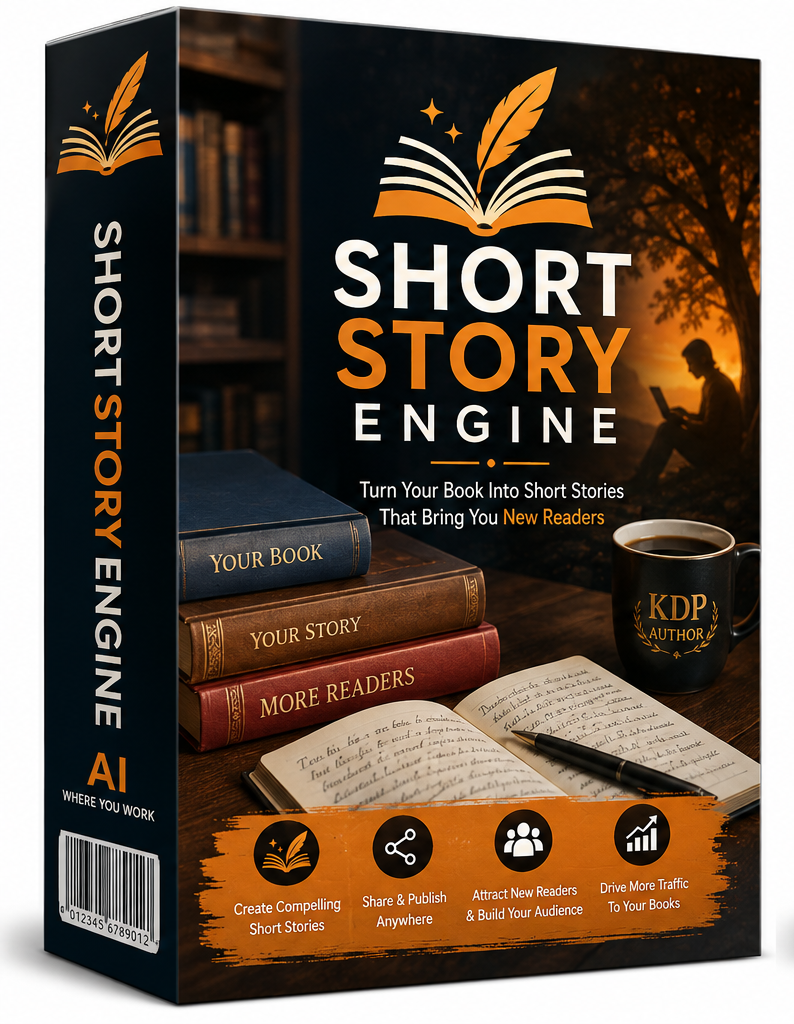
ShortStoryEngine is an AI-powered short-story creation system for KDP publishers, self-published authors and aspiring writers.
The basic idea is quite clever.
You can take an existing book, manuscript, character, story world or even an unfinished idea and use it to create standalone short stories that connect naturally with the larger project.
Those stories could be prequels, missing scenes, character origin stories, side-character adventures, seasonal stories, bridge stories between books or exclusive stories used as reader magnets.
And you don’t necessarily need a completed book to start.
If you’re still developing your novel, you can begin with the characters, setting or premise and create smaller stories while the main project is taking shape.
That distinction matters because the real purpose here isn’t simply creating more fiction.
It’s using short stories as reader-discovery assets.
Instead of introducing somebody to you by immediately saying, “Here’s my Amazon page — buy my book,” you’re giving them something smaller to experience first.
The sequence becomes something closer to:
Stranger → Short Story → Interested Reader → Book
I think that’s probably the strongest concept behind ShortStoryEngine.
ShortStoryEngine comes from Matt Garrett and AIWhereYouWork, with the product being sold through WarriorPlus. Matt has been around the online marketing and software space for a long time, particularly with tools aimed at publishing, content creation and online business.
What I appreciate with this release is that it isn’t trying to reinvent AI book writing for the hundredth time. The idea is much more specific: authors often concentrate so heavily on creating the book that they only start thinking about attracting readers once it is already sitting on Amazon.
ShortStoryEngine approaches that problem from the opposite direction. Instead of waiting until launch day, it gives authors a practical way to create smaller pieces of content around their book, characters or ideas and start putting those in front of potential readers earlier.
That is a much more interesting angle to me than simply releasing another “AI writes your book” app.
The main ShortStoryEngine software helps you develop short stories around material you already have.
You can work from a finished book, manuscript, characters, plot, genre, concept or relatively simple idea.
That makes the software useful at several stages of the publishing process rather than only after a book has been completed.
One thing I like here is that the stories aren’t supposed to be completely random pieces of AI fiction.
ShortStoryEngine revolves around several specific companion-story formats, including:
These are particularly useful for fiction authors because they allow you to expand the world around a book without simply copying or chopping up existing chapters.
This is probably one of the most practical uses.
Instead of putting a generic “Join my newsletter” box in front of someone, you could offer an exclusive story connected to your book.
Now the invitation becomes something closer to:
“Would you like to read this story?”
The reader receives something tangible, while you gain an opportunity to continue communicating with them through your email list.
You’ll still need your own autoresponder or newsletter service to actually collect subscribers.
A short story doesn’t have to be published once and forgotten.
The same core material could potentially become newsletter content, serialized social posts, excerpts, quotes, website content, reader bonuses and promotional material.
For authors who dislike constantly thinking up new promotional content, I can see this being genuinely useful.
You’re essentially squeezing more marketing mileage from something you’ve already created.
The front-end also includes the Short Story Traffic Playbook.
This is important because generating stories is only half the equation. You still need to know what to do with them.
The Playbook covers reader-discovery strategies, companion-story ideas, repurposing, social sharing, newsletters, reader magnets and a 30-day traffic plan.
That makes ShortStoryEngine feel more complete than a basic AI story generator.
The included plan breaks the marketing process into four stages:
Week 1: Create and introduce the story
Week 2: Share and serialize it
Week 3: Capture interested readers
Week 4: Repurpose and reconnect the story with your book
It’s simple, but I actually prefer that.
Authors don’t necessarily need another complicated traffic strategy containing 47 different things they’re supposed to do every day.
The workflow is fairly straightforward.
You don’t have to upload a perfect finished novel.
You can begin with:
You then look for stories sitting around the larger project.
Maybe something happened before Chapter One.
Perhaps an interesting supporting character deserves their own story.
Maybe there’s an event that took place off-page or a gap between Book One and Book Two that could become a bridge story.
This is where I think the system makes the most sense because you’re not continually starting from a completely blank page.
ShortStoryEngine helps turn the selected idea into a standalone piece that someone can actually enjoy without needing to read the main book first.
That’s an important distinction.
The story shouldn’t feel like a badly disguised advertisement for your novel. It needs to provide enough value and entertainment to stand on its own.
Once the story is finished, you can reuse elements of it across newsletters, your website and social content rather than creating everything from scratch.
Finally, connect that interest with your larger publishing ecosystem.
That could be:
Your full book.
Your Amazon author page.
Another book in the series.
Your website.
Your newsletter.
Or another free story.
The way I see it, this final piece is crucial.
Generating 50 short stories without building a pathway between those stories and your books won’t accomplish very much.
ShortStoryEngine is primarily aimed at KDP publishers and self-published authors, particularly people working with fiction.
I think it makes the most sense for:
It could also be useful if your book has already been sitting on Amazon for months without much happening.
Instead of endlessly changing keywords or waiting for Amazon to somehow discover it, you can start creating additional entry points into the world you’ve already built.
If you’re writing nonfiction, there is some potential too. Short narrative examples and educational stories could introduce the subject or demonstrate ideas from your main book.
That said, I think fiction and story-driven publishing are definitely the stronger fit. The product itself acknowledges that as well.
What stands out to me is that ShortStoryEngine tackles a different part of the KDP puzzle.
There are already countless tools that help you find a niche, outline a book, generate chapters, design covers and upload everything to Amazon.
But publishing the book doesn’t automatically create readers.
ShortStoryEngine tries to help bridge that gap by giving authors more reasons to show up in front of potential readers before and after publication.
1. It’s built around a sensible marketing concept
Giving somebody a free story is a much smaller first commitment than asking an unknown reader to immediately purchase a book.
I like that approach.
2. You can use material you’ve already created
One finished book could potentially produce numerous prequels, missing scenes, character stories and reader magnets.
That’s much more efficient than constantly creating unrelated promotional content.
3. You don’t need a finished book
If you’re just starting out, you can begin with your characters, premise or story world while developing the main book alongside it.
4. The Traffic Playbook adds real value
Without the marketing component, this could easily become another AI content generator.
Including reader magnets, repurposing strategies and the 30-day plan gives the stories an actual business purpose.
5. The front-end price is reasonable
The advertised launch price is $27 as a one-time payment, and the sales page states that the Short Story Traffic Playbook and a 30-day money-back guarantee are included.
1. It doesn’t magically provide traffic
This needs to be clear.
ShortStoryEngine creates assets you can use to attract readers. It doesn’t automatically send thousands of readers to those stories.
You’ll still need to publish, share and promote them.
2. AI output still needs human editing
I would never recommend blindly taking AI-generated fiction and publishing it untouched.
Characters, continuity, tone, repetition and general writing quality should always be checked before anything reaches your audience.
The product’s own disclaimer also advises reviewing and editing generated material before publishing it.
3. Some of the more advanced publishing tools are upsells
The front-end handles the short-story creation and traffic strategy, but tools such as the Submission Assistant are separate upgrades.
That’s not unusual for WarriorPlus software, but it’s something you should know before purchasing.
If you prefer a system focused specifically on capturing readers and building an audience around your books, I’d also recommend checking out AI Reader Rocket. It’s a different approach, but it tackles another important part of the same reader-building problem.
The ShortStoryEngine funnel starts with the main short-story creation system and then expands into publishing, book promotion and audience-building tools.
The regular front-end price is $27, but during the launch there will be a $10 discount coupon, bringing the price down to $17 as a one-time payment.
The front end includes:
So, as long as the launch coupon is still active, you can pick up the complete front-end package for $27 instead of $37.
This is an additional AI-powered cover creation tool for creating covers for short stories, reader magnets, ebooks and other publishing assets.
It’s optional and isn’t required to use ShortStoryEngine itself.
This is probably the most closely connected upgrade in the funnel.
Once you’ve created your stories, the Submission Assistant is designed to help you organise them, find suitable publishing opportunities and manage the submission process from one central place.
It includes:
The standard option is a $47 first-year licence.
There is also a lifetime licence option available for buyers who would rather avoid future renewals.
Short Story Pilot is a browser extension designed to help you discover and develop short-story ideas while you’re browsing and working online.
It’s more of a convenience upgrade for people who plan to create stories regularly.
This upgrade moves beyond story creation and into the book-marketing side.
It combines tools focused on promoting books and supporting the wider self-publishing process.
If you decline the previous offer, you may also see Publisher Pro.
It includes 12 book-marketing systems together with Promote Your Book Like A Pro.
Newsletter Pilot focuses on helping authors build an audience they can communicate with directly rather than depending entirely on Amazon or social platforms.
This fits quite naturally with the reader-magnet strategy inside ShortStoryEngine because your free stories can give people a reason to join your list.
This package includes three additional publishing tools:
It’s aimed more at buyers who want to expand into several different publishing formats.
The final offer is RebranderClub, a recurring membership focused on rebranding and selling your own AI software.
This is quite separate from the main ShortStoryEngine concept and certainly won’t be necessary for the average author who simply wants to create and promote books.
Overall, you do not need the entire funnel to use ShortStoryEngine.
If your main interest is creating companion stories and using them to attract readers, I’d start with the $17 launch front end while the $10 coupon is available. Then only consider an upgrade if it solves a specific publishing or marketing problem you actually have.
No.
You can use a completed book, but you can also start with characters, an outline, a premise, a setting, a topic or simply an idea.
No, although I think fiction is clearly its strongest use case.
Nonfiction publishers can potentially use narrative examples, educational stories and other reader-facing content to introduce their ideas.
Yes, and this is worth mentioning.
You absolutely can ask ChatGPT or another general AI platform to write a short story.
The difference is that ShortStoryEngine is structured specifically around turning those stories into companion content, discovery assets, reader magnets and promotional material connected to a larger book project.
No.
It helps you create material that can be used to attract and nurture readers, but you still need to distribute and promote that content.
Yes.
That’s actually one of my favourite uses for the system.
You could offer an exclusive story in exchange for someone joining your author newsletter or reader list.
You’ll need your own email marketing platform to collect the subscriber.
No.
You remain responsible for choosing where the stories are published or distributed.
Yes.
In fact, an existing book gives you plenty of material to work with — characters, backstories, missing events, locations, conflicts and other elements that could become new standalone stories.
The front-end sales page states that ShortStoryEngine includes a 30-day money-back guarantee.
No.
And I wouldn’t trust a publishing tool that promised that.
ShortStoryEngine can help create more opportunities for people to discover your work, but results will still depend on your book, story quality, niche, promotion, audience and execution.
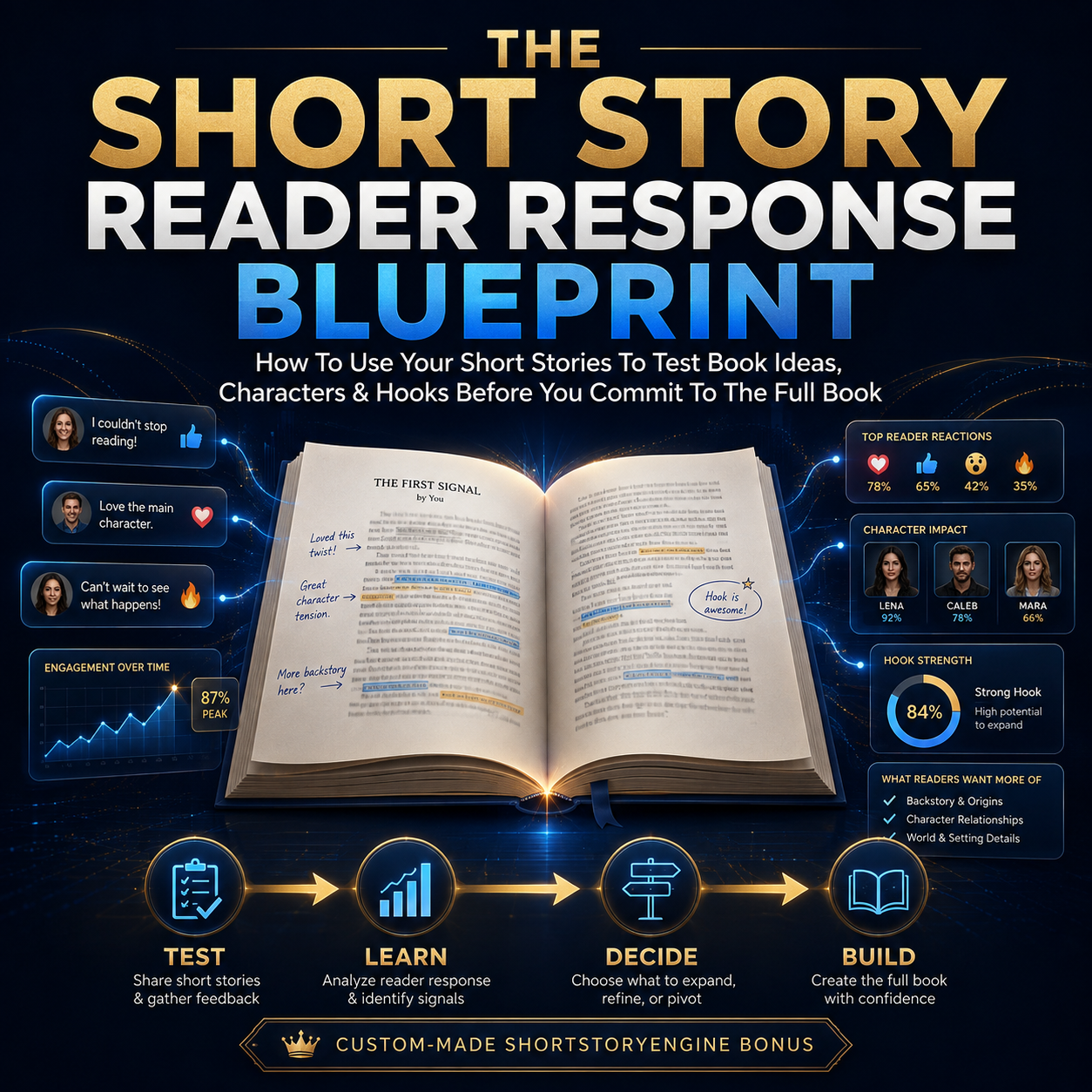
Custom-made to complement ShortStoryEngine, this bonus shows you how to use reader reactions to test characters, hooks, settings and book ideas before committing to a full manuscript. Turn your short stories into a practical validation tool and make smarter publishing decisions based on what readers actually respond to.
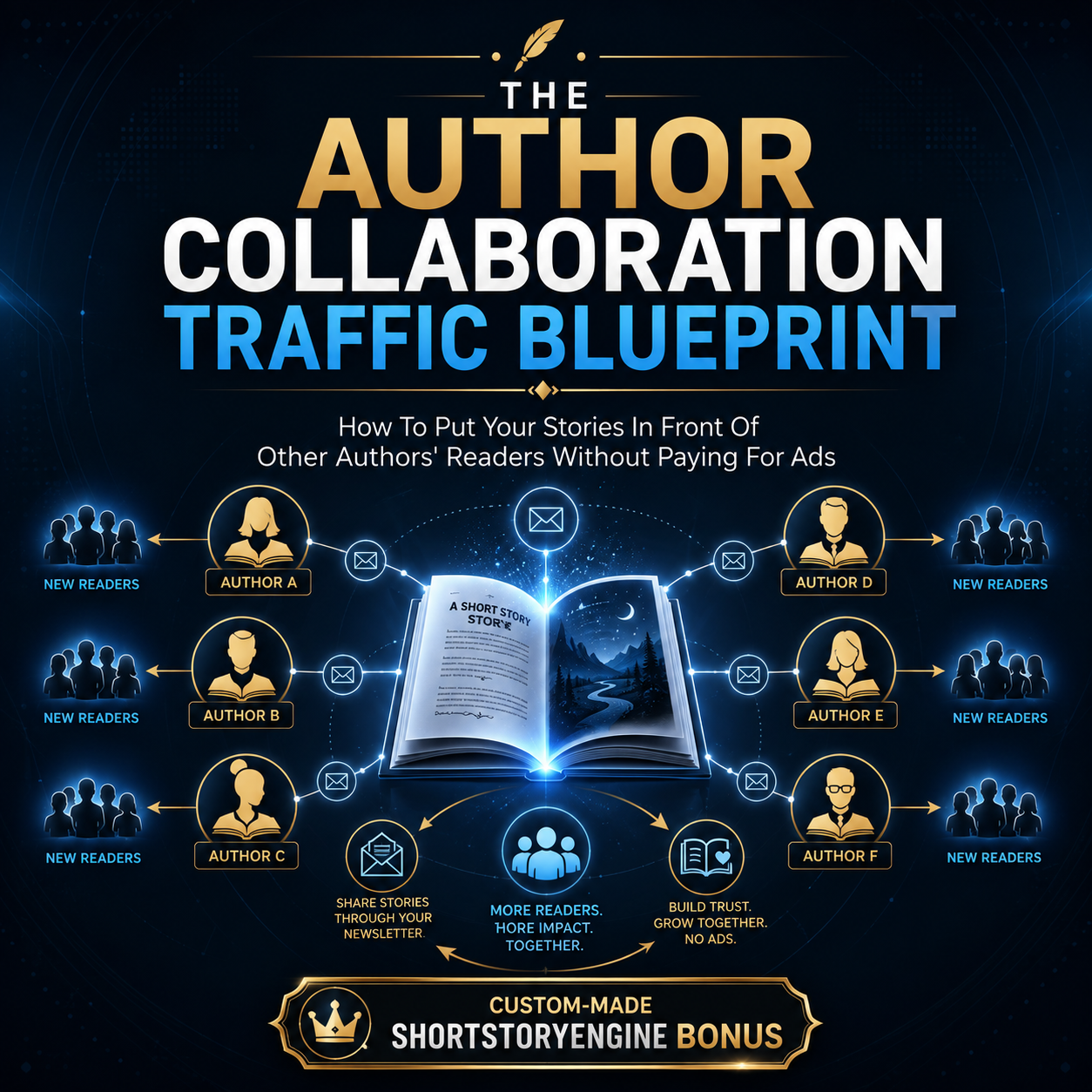
Created specifically to extend ShortStoryEngine’s traffic strategy, this bonus shows you how to reach new readers through author collaborations, newsletter swaps, story swaps and group promotions. A must-have for putting your stories in front of targeted audiences without relying on paid ads.

Custom-created to complement ShortStoryEngine’s audience-building approach, this bonus shows you how to turn your most engaged readers into an ethical ARC and launch team. Learn how to invite, manage and retain early readers so you have genuine support ready when your next book launches.
– Your bonuses will be automatically delivered inside your JVZoo or WarriorPlus customer portal.
– If for any reason you experience any issues accessing your bonuses, we’ve got you covered! Simply visit our Claim Bonuses page, fill out the form, and we’ll assist you with accessing your bonuses.
Overall, I think ShortStoryEngine has one of the more sensible angles I’ve seen around AI-assisted publishing lately.
There are already plenty of tools that help people create books.
The bigger question is what happens after you’ve created one.
That’s why I like the concept of taking characters, worlds and ideas you’ve already spent time developing and turning them into smaller reader experiences.
Instead of repeatedly posting your Amazon link and hoping somebody buys, you’re giving readers a chance to experience your writing before asking them for anything.
To be fair, ShortStoryEngine isn’t going to solve traffic automatically.
You’ll still have to publish the stories, put them in front of people, build your email list and create a sensible pathway back to your books.
And I would absolutely edit the AI-generated material rather than treating the first output as finished publishing-quality fiction.
But for authors who already have books gathering dust on Amazon — or people currently creating a book and wondering how they’ll eventually find readers — I can see a very practical use for this.
At the $27 launch price, I think the combination of the creation software and Short Story Traffic Playbook offers reasonable value, particularly if you actually follow through and use the stories as reader magnets, newsletter material and ongoing promotional assets rather than simply generating them and leaving them inside the software.
My verdict: ShortStoryEngine isn’t a magic book-sales button, and that’s actually why I’m comfortable with the concept. It’s a practical content-and-reader-building tool that gives self-published authors more ways to introduce potential readers to their work before asking for the sale.
ShortStoryEngine Bonuses
If you decide to pick up ShortStoryEngine through my link, you’ll also get access to exclusive bonuses designed to help you get results faster.
These bonuses are created to complement the main product and give you additional strategies, tools, and guidance so you can make the most out of the system.
👉 Click here to get ShortStoryEngine + all exclusive bonuses
Explore latest products of the day from WarriorPlus and JVZoo